


Turning license management into product-led expansion
Intruder's license page was a passive status summary — users couldn't see when they were approaching capacity, had no clear path to expand, and our sales team had to manually check usage to identify upsell opportunities. I combined Canny feedback, sales team insights, and 12+ customer interviews to map the problem space. Four key themes emerged: unclear license assignment, confusion between license types, lack of visibility into approaching limits, and no proactive expansion guidance. I designed a systematic four-phase solution that aligned business growth with user success.
User Discovers They Need More Licenses
Usually happens during critical configuration or when trying to scan new assets
“I only discovered that I didn't have enough licenses once I had spent a considerable amount of time configuring my authentication.” – Enterprise Customer
Confusion About License Types & Assignment
Users struggle to understand application vs infrastructure licenses and assignment process
“The process of assigning a license to a target is quite complicated and unclear. It would be very helpful if the license screen provided clear instructions.” – Customer Feedback
Manual License Management Struggles
Users must manually track usage, wait for license releases, and lack expansion control
“I was not able to just kind of downgrade those licenses and just keep what I wanted. My only option was to cancel.” – Customer Interview
Support Ticket or Sales Contact Required
Users must reach out for help with license issues, creating delays and support burden
Research findings
Common pain point patterns
The research revealed consistent themes across user types: confusion between application versus infrastructure licenses, unclear license assignment processes, lack of visibility into approaching limits, and no proactive guidance for expansion decisions.
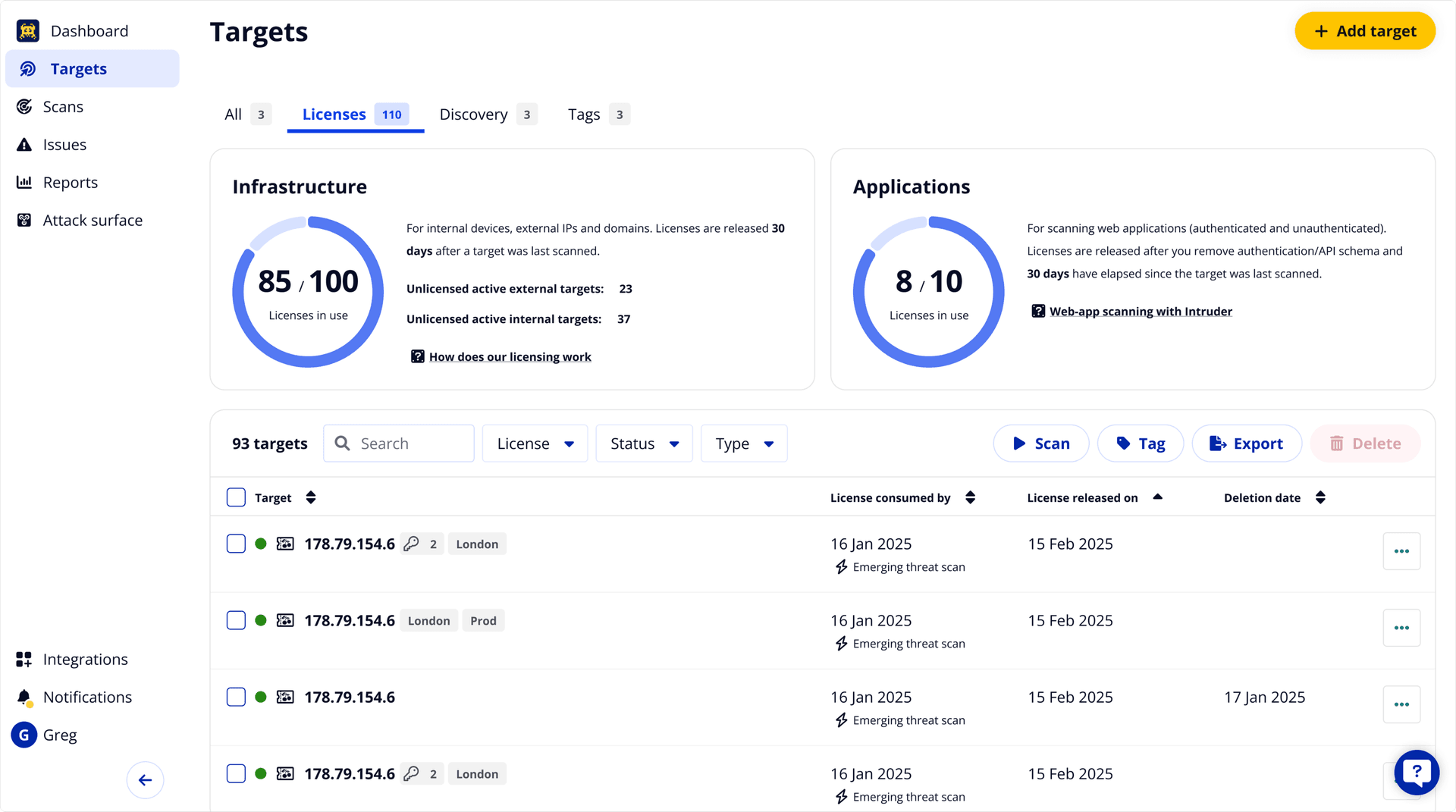
Proactive License Status Awareness
Clear dashboard shows current usage, approaching limits, and available licenses
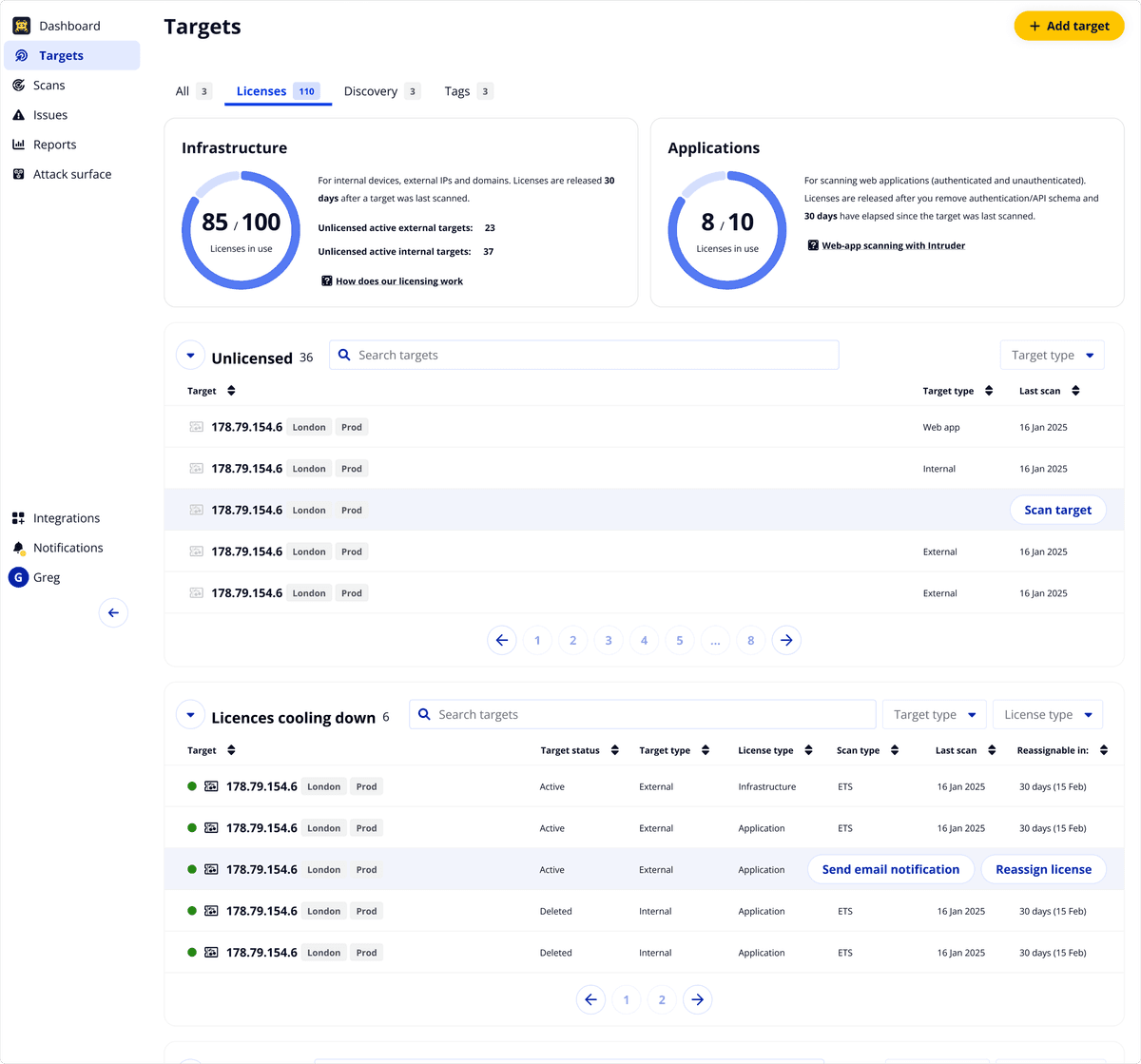
Contextual Expansion Guidance
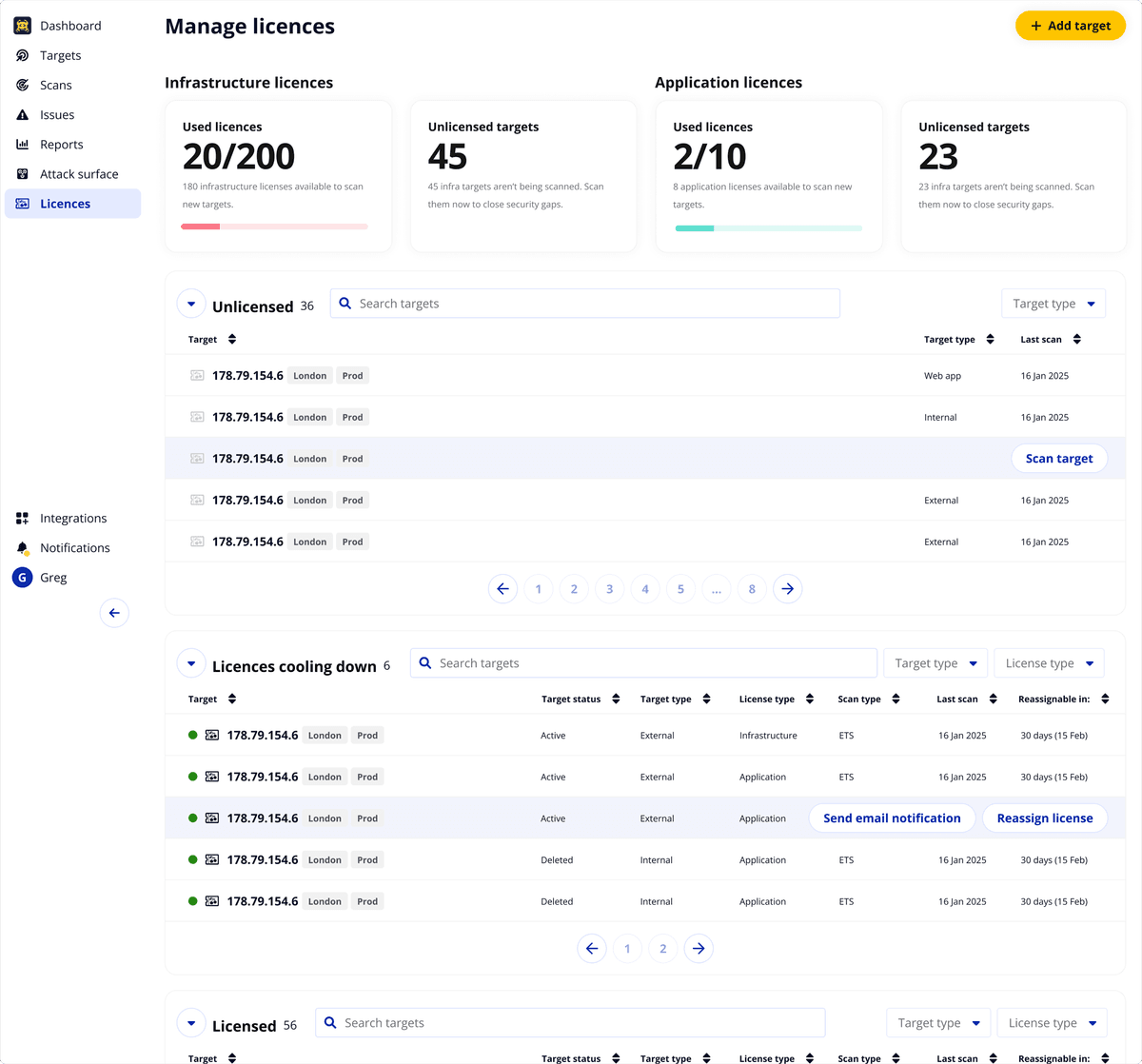
Dynamic cards show relevant actions based on current license status and needs
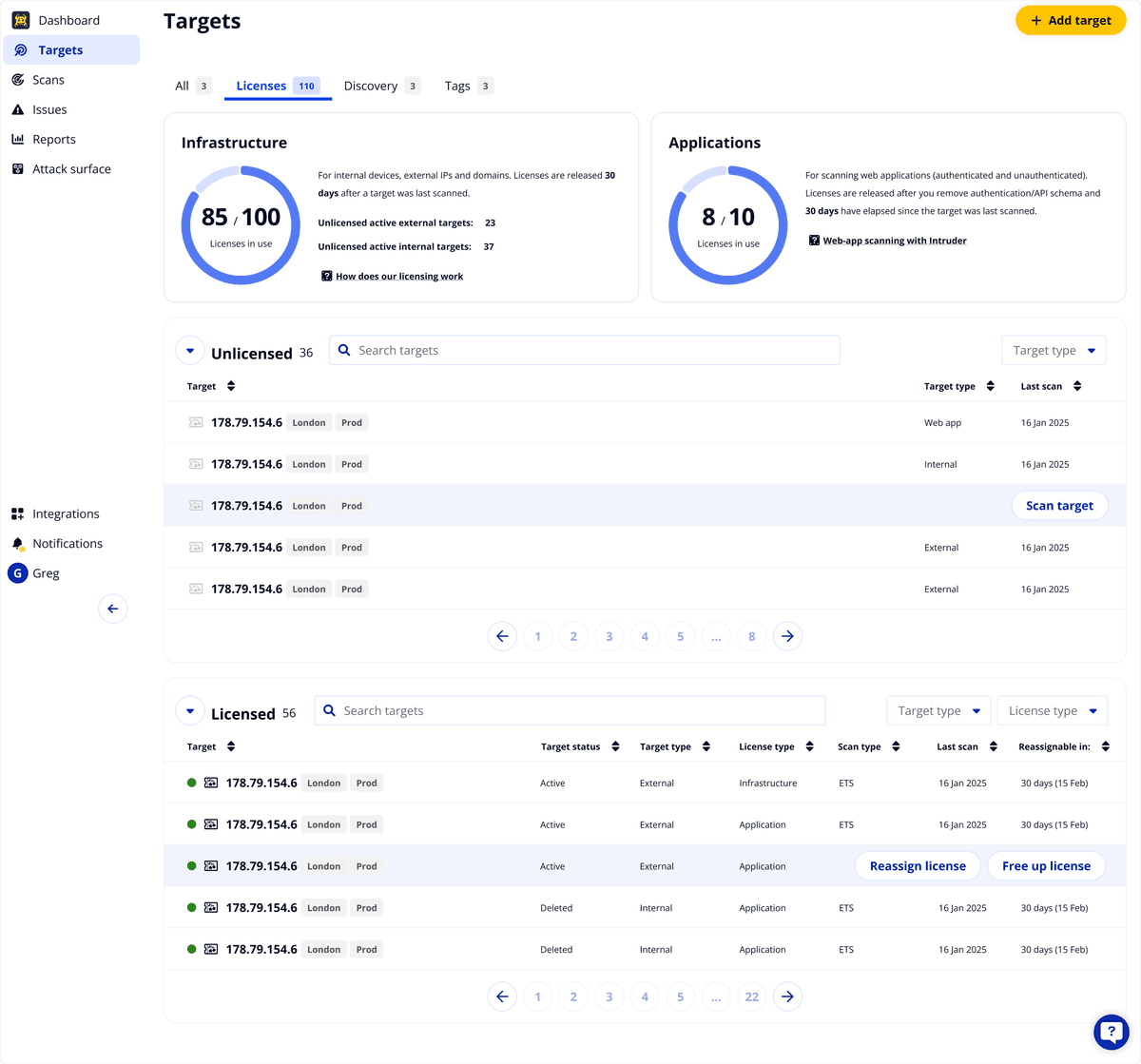
Self-Service Management & Expansion
Users can assign, reassign, and expand licenses directly — with intelligent cooling-down periods and one-click purchasing
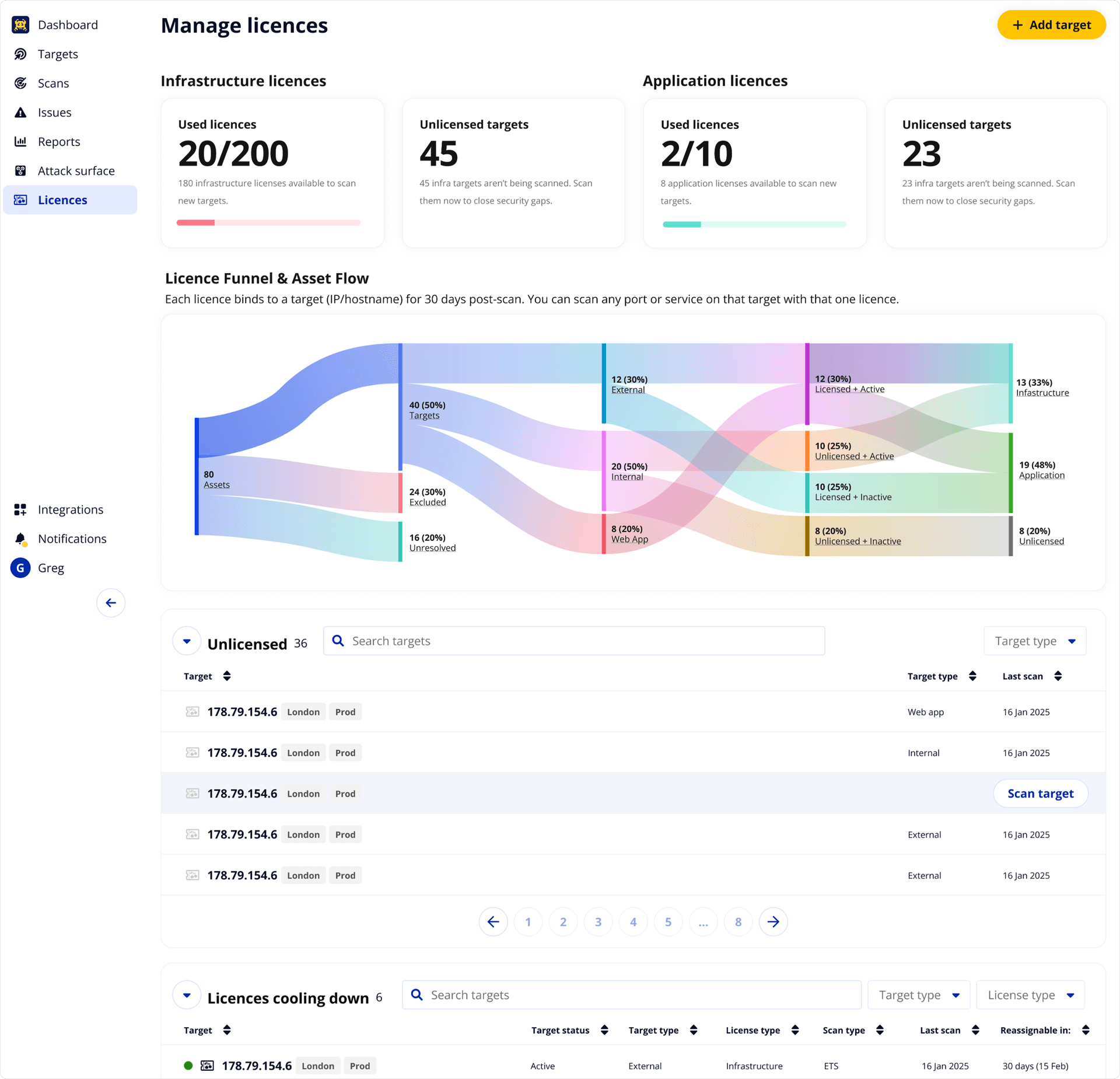
Complete Visibility & Control
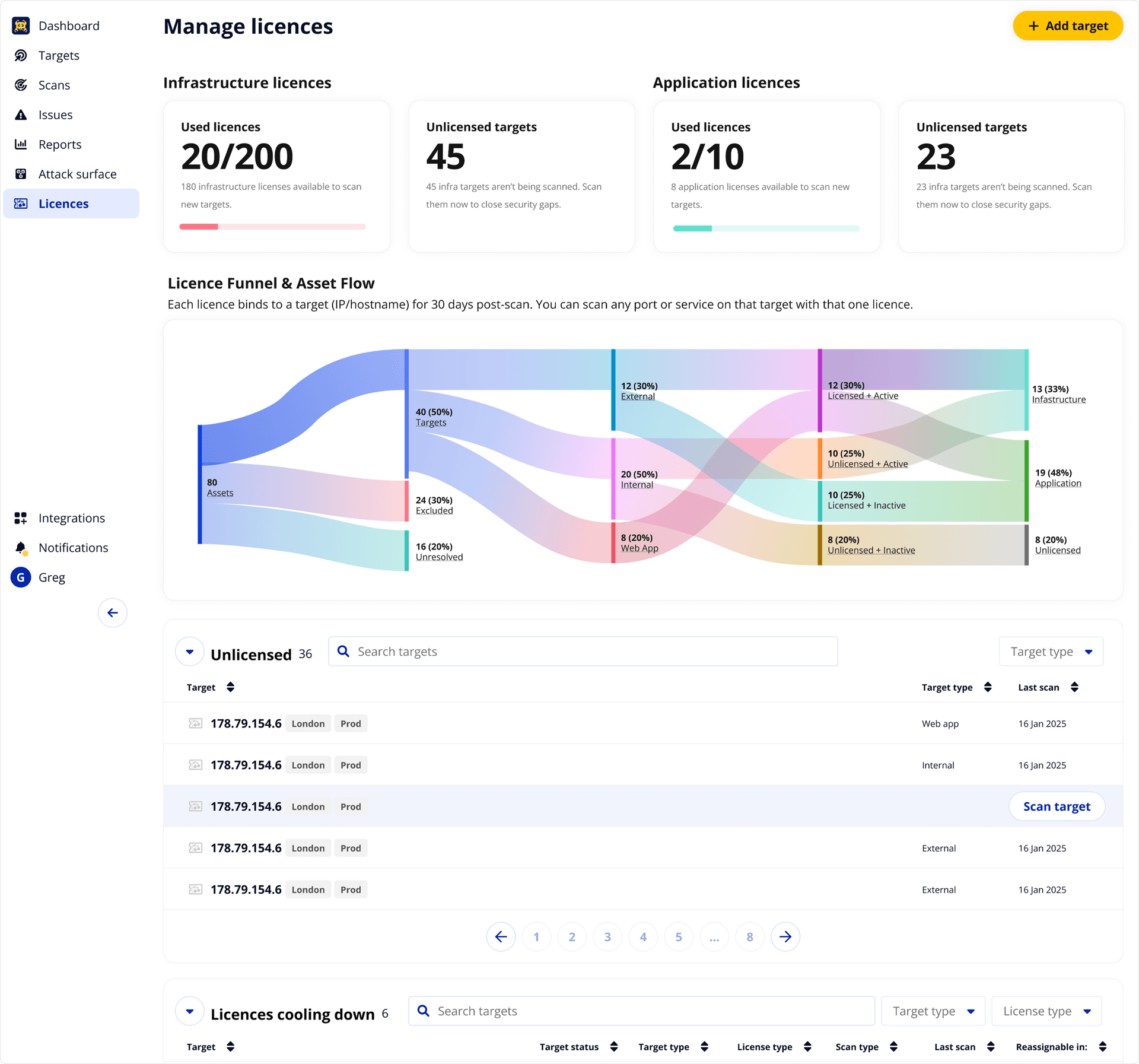
Sankey diagram provides full asset-to-license flow visibility for strategic planning
Solution design
From passive reporting to active growth
Based on research insights, I designed a comprehensive four-phase solution that would transform the license page from passive reporting to active growth facilitation. Each phase built upon the previous one, allowing for iterative implementation and validation.
Iterative approach
Four phases, each delivering standalone value
I designed the solution to be shipped in stages — each phase built upon the previous one while delivering standalone value. Phase 1 restructured license tables for clarity. Phase 2 introduced proactive cooling-down notifications. Phase 3 added contextual expansion guidance through dynamic cards. Phase 4 brought complete visibility with an interactive Sankey diagram mapping discovered assets to licensed targets.
This approach balanced user impact and technical complexity, allowing for feedback loops at each stage and reducing implementation risk.
Iterative approach
Four phases, each delivering standalone value
I designed the solution to be shipped in stages — each phase built upon the previous one while delivering standalone value. Phase 1 restructured license tables for clarity. Phase 2 introduced proactive cooling-down notifications. Phase 3 added contextual expansion guidance through dynamic cards. Phase 4 brought complete visibility with an interactive Sankey diagram mapping discovered assets to licensed targets.
This approach balanced user impact and technical complexity, allowing for feedback loops at each stage and reducing implementation risk.
Reflection
Strategic design beyond shipped pixels
The solution addressed three distinct user types — Admins needing license visibility, Finance/Compliance roles needing utilisation reporting, and Internal Sales teams needing shared artifacts for upgrade conversations. I structured the four-phase rollout by user impact and technical complexity, addressing key risks upfront: pagination for large data volumes, feature flags for plan-specific logic, and accessible alternatives for complex visualisations.
This project was not shipped — the company shifted strategy toward acquisition. But the research insights informed other product decisions, and the systematic approach created a clear roadmap ready to be picked up. Unshipped work is still valuable work — starting with real user problems and designing systematic solutions bridges the gap between customer needs and business growth, even when the pixels never reach production.