


Redesigning pricing to remove technical dependencies
When technical constraints start limiting business growth, it's time for design and research to step in. At Intruder, our reliance on Tenable's scanner technology wasn't just a technical debt — it was preventing us from serving customers who needed cybersecurity solutions without third-party dependencies. This project combined comprehensive user research with creative design storytelling to launch a new pricing tier that fundamentally changed our business model.
The design challenge
Removing Tenable dependency through design
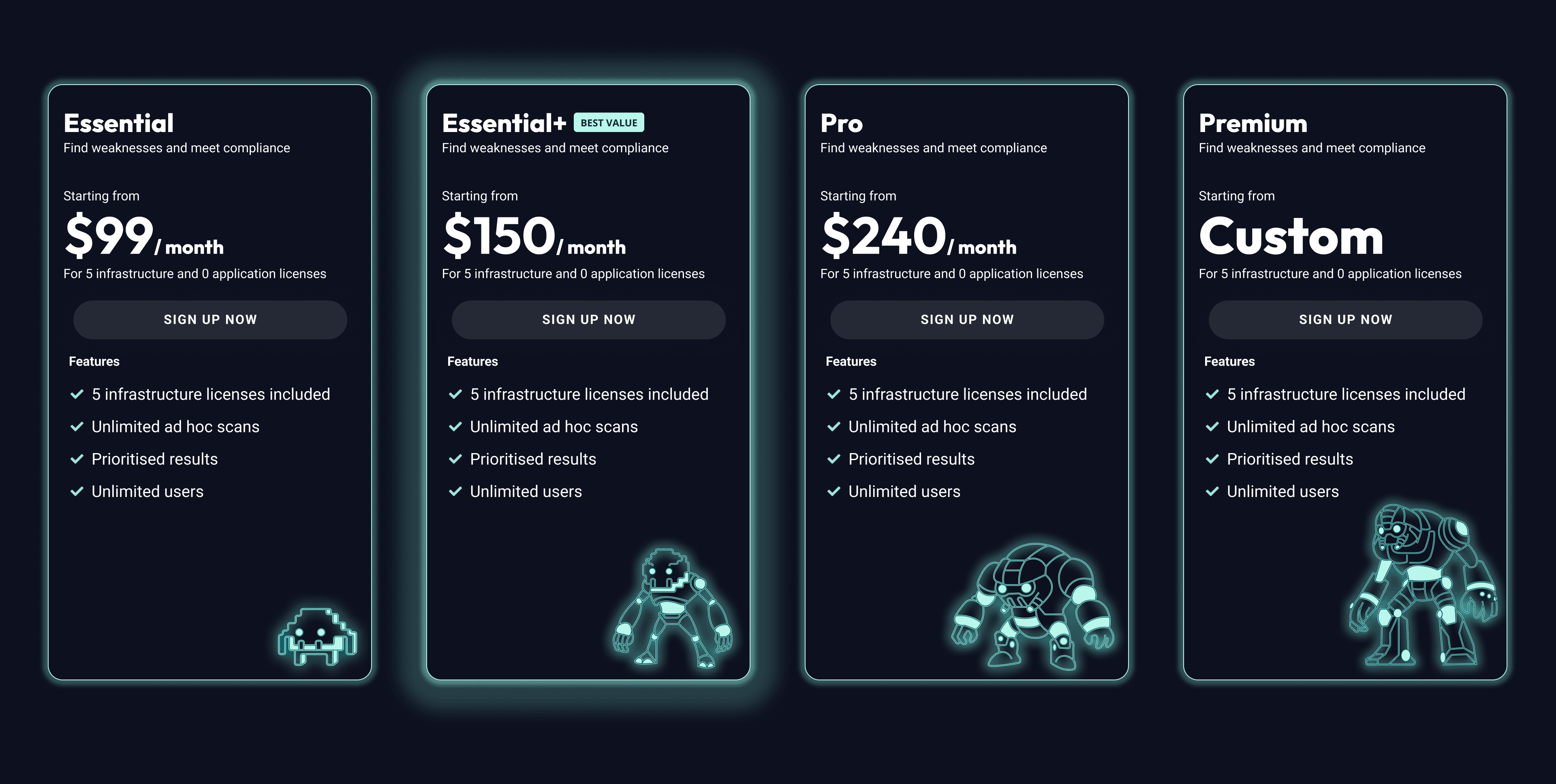
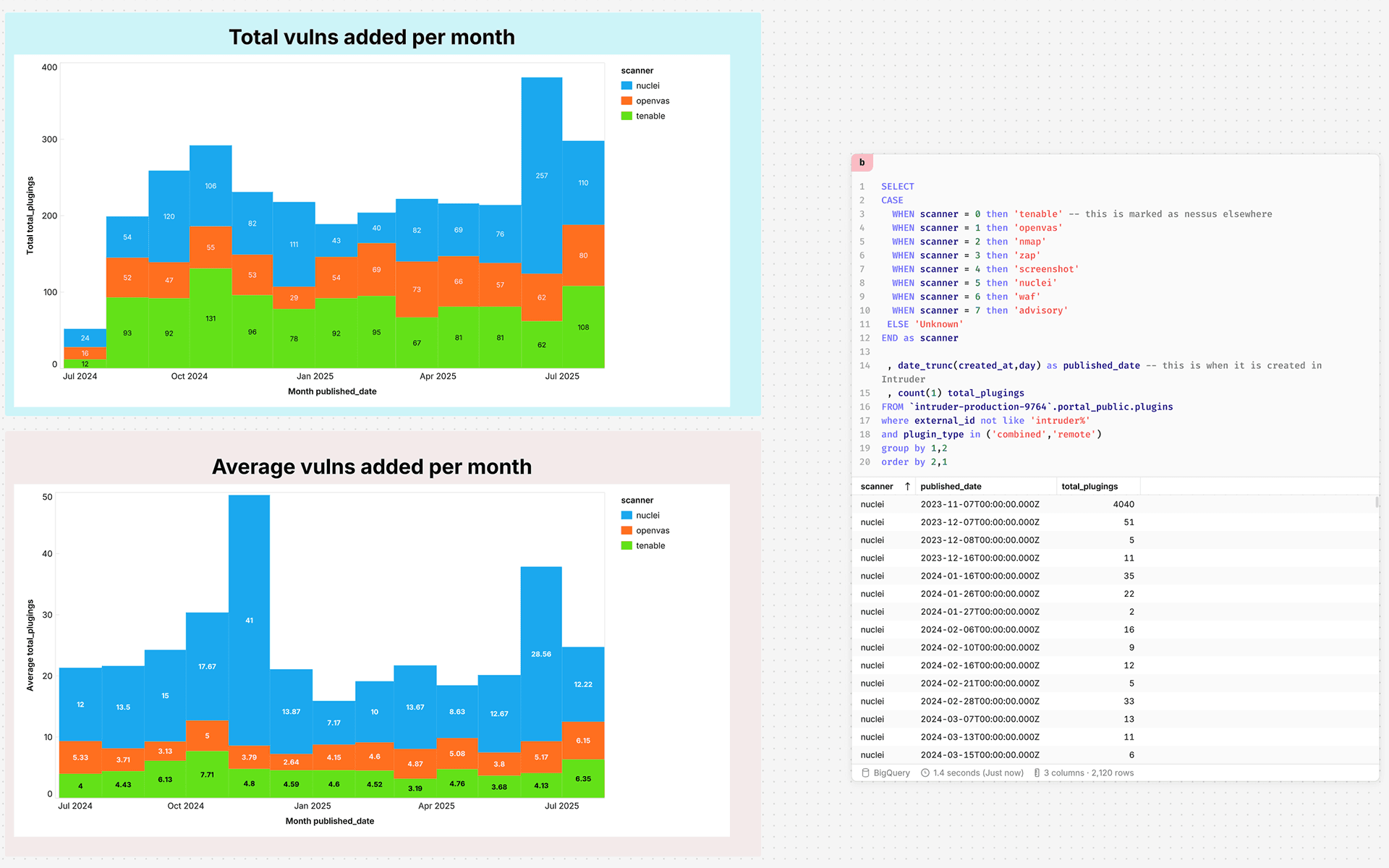
Our reliance on Tenable's scanner technology wasn't just technical debt — it was preventing us from serving customers who needed cybersecurity solutions without third-party dependencies. The challenge was to design a new pricing tier that would make this transition feel seamless and valuable to customers.
Research foundation
Understanding our users through data
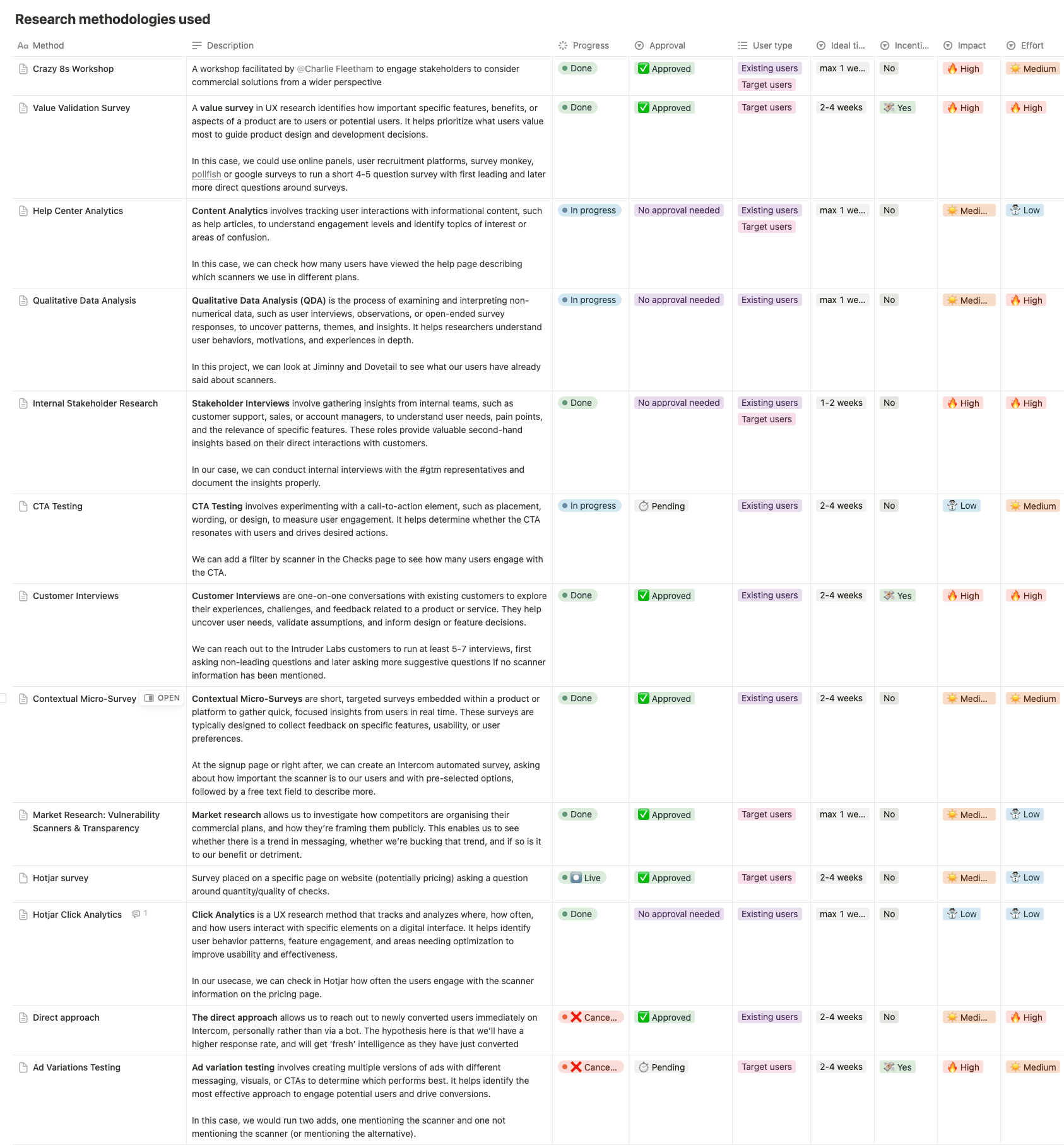
I developed a multi-faceted research approach that combined quantitative data with qualitative insights to build a complete picture of our customer landscape. The research methodology included 15 different approaches, each designed to answer specific questions about user behavior, needs, and preferences.
- Crazy 8s workshops with stakeholders to surface assumptions and align on customer understanding
- Customer interviews revealing unanticipated pain points and validating segment hypotheses
- Value validation surveys identifying how customers prioritised features beyond technical capabilities
- CTA and A4 variation testing to understand what resonated with different segments
- Internal stakeholder research with support, sales, and account managers for frontline insights
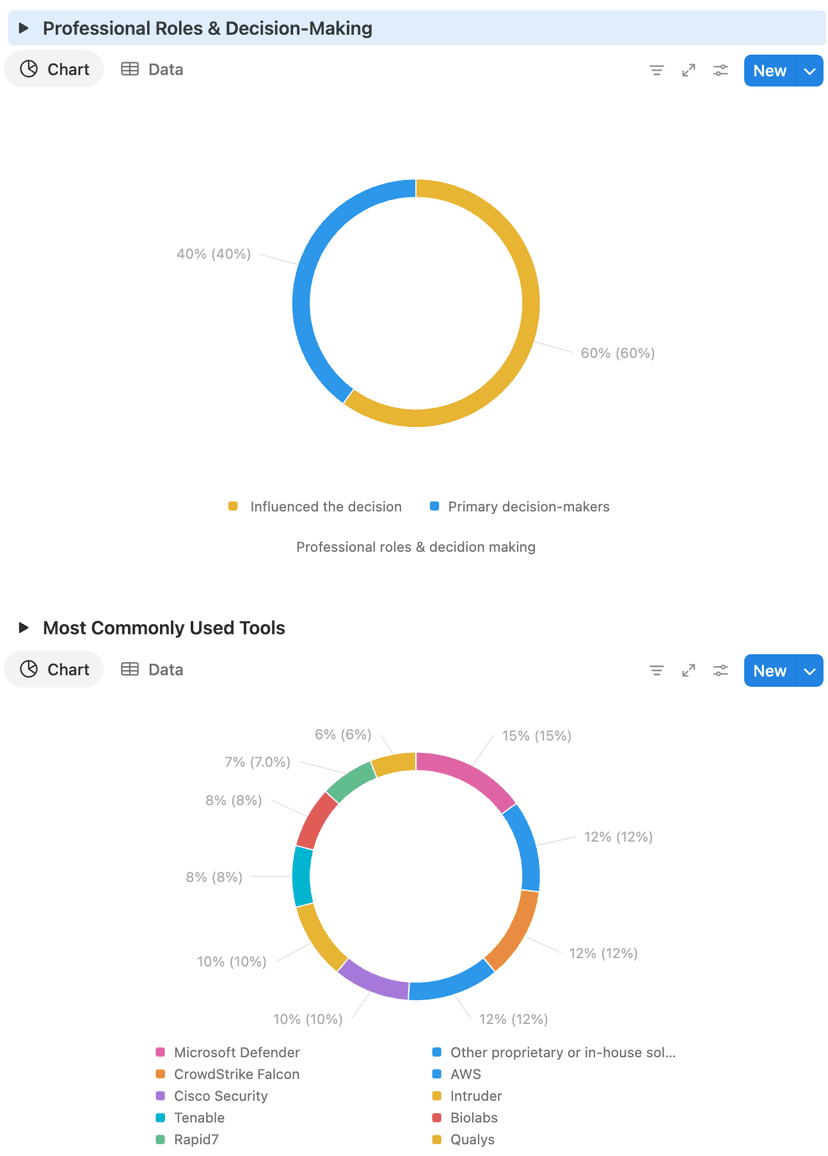
- Micro-surveys and market research to profile how customers discover and evaluate cybersecurity solutions
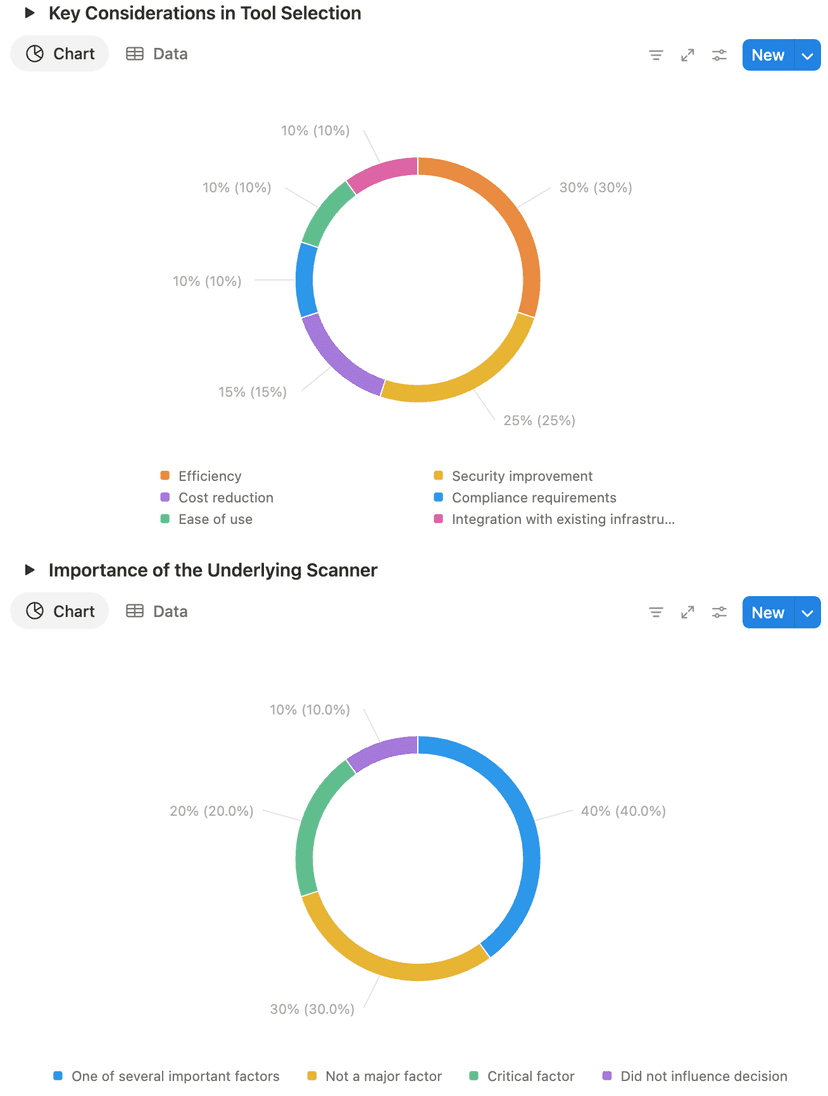
Key research insights
The research reshaped our pricing strategy
Precision over volume.59% of respondents preferred "targeted vulnerability checks for your tech stack" over "more checks" — validating positioning around precision rather than quantity.
Trust and control matter.Customers weren't rejecting Tenable for technical reasons — they were rejecting the loss of control, the extra vendor relationship, and the added complexity.
Efficiency drives decisions. Customers want seamless experiences and better integration over complex multi-vendor setups.
Technology understanding is a gate.Help Centre analytics showed "What is scanning technology" was one of our most-visited articles — visitors needed to understand our core tech before committing to trials.
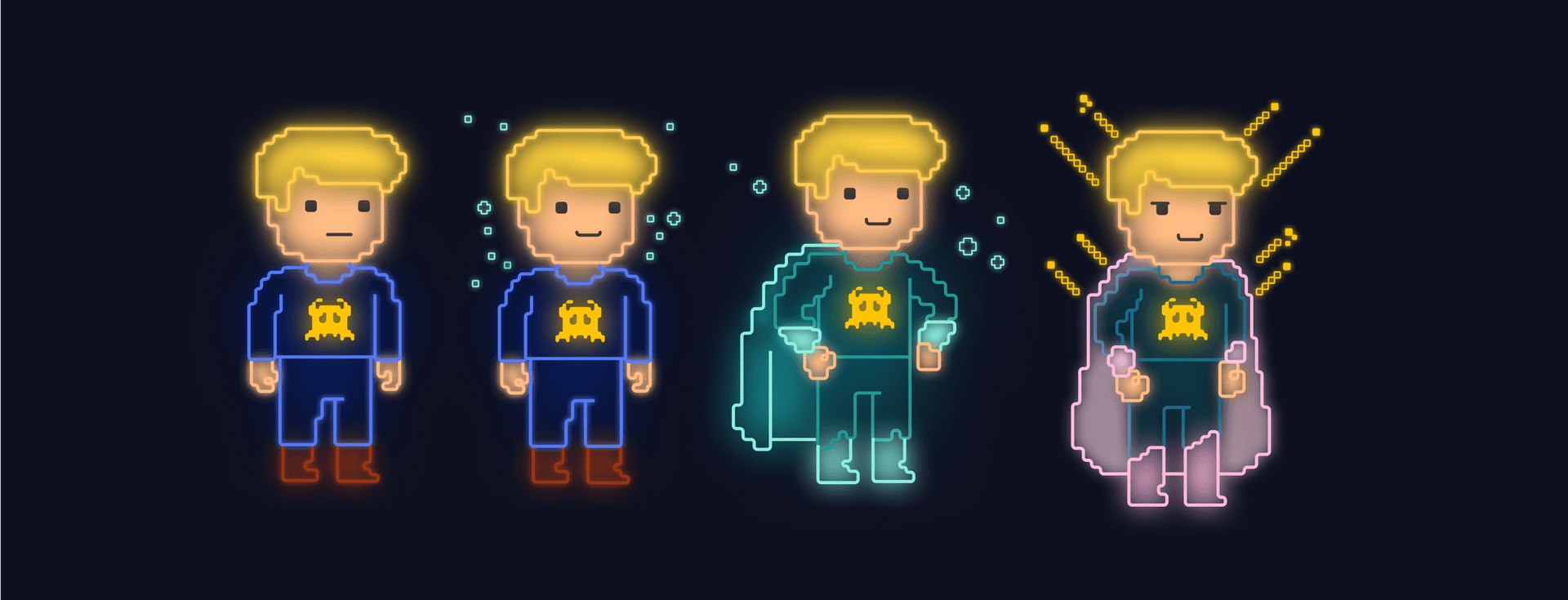
Design story: superheroes
From customer insights to character concepts
With research in hand, the design challenge was: how do you make a fourth pricing tier feel engaging rather than just another feature list?
My first concept represented users as superheroes — the more advanced the plan, the more powerful the hero. But feedback revealed a key pivot: users preferred seeing the villains we protect them from rather than themselves as heroes. This shifted the approach toward representing the threats our scanning technology defeats.
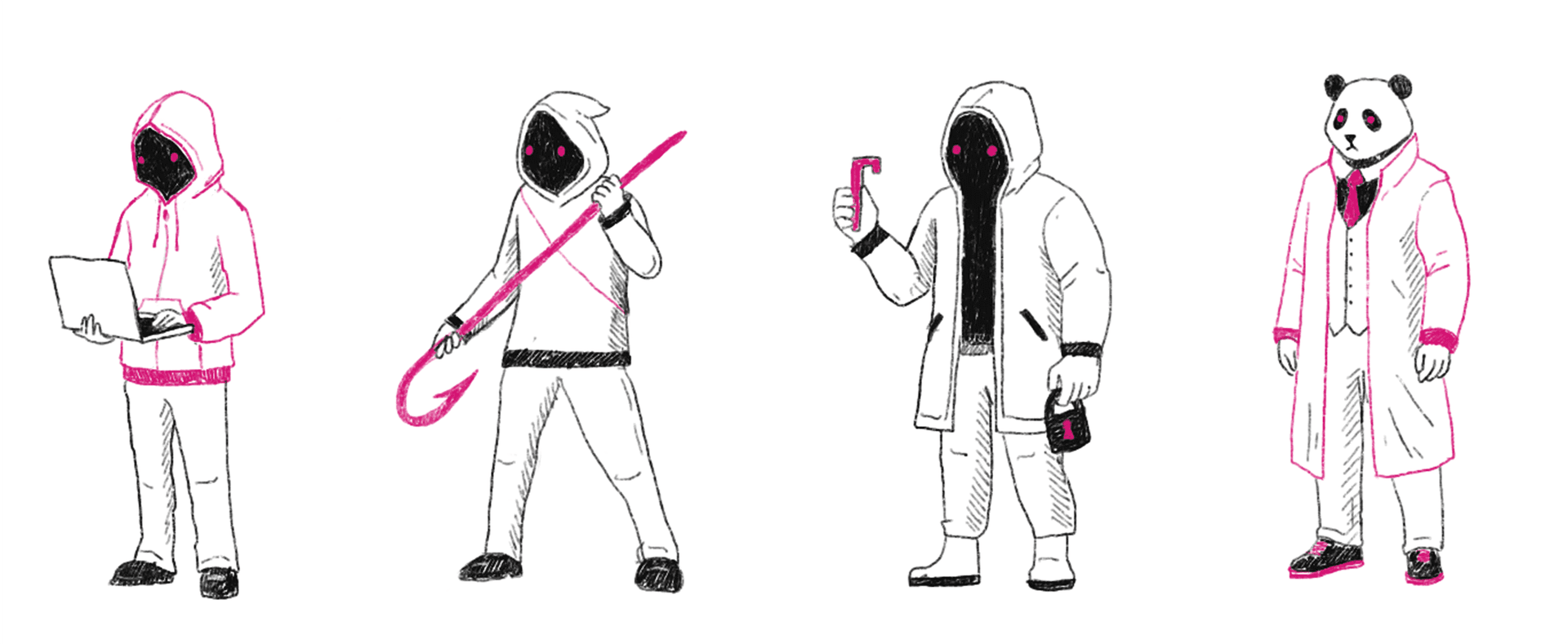
Design story: villains
Cybersecurity villains
Based on this insight, I created four distinct villain characters: a home hacker (or "script kiddie"), a cunning phisher, a "locksmith" hacker, and the ultimate "panda gangster" referencing how many Chinese cyber threat groups are nicknamed "panda."
The concept felt solid — evil characters representing escalating threat levels. But team feedback pushed me toward something more reminiscent of classic game villains, tying back to Intruder's roots since our logo "Greg" is inspired by Space Invaders.
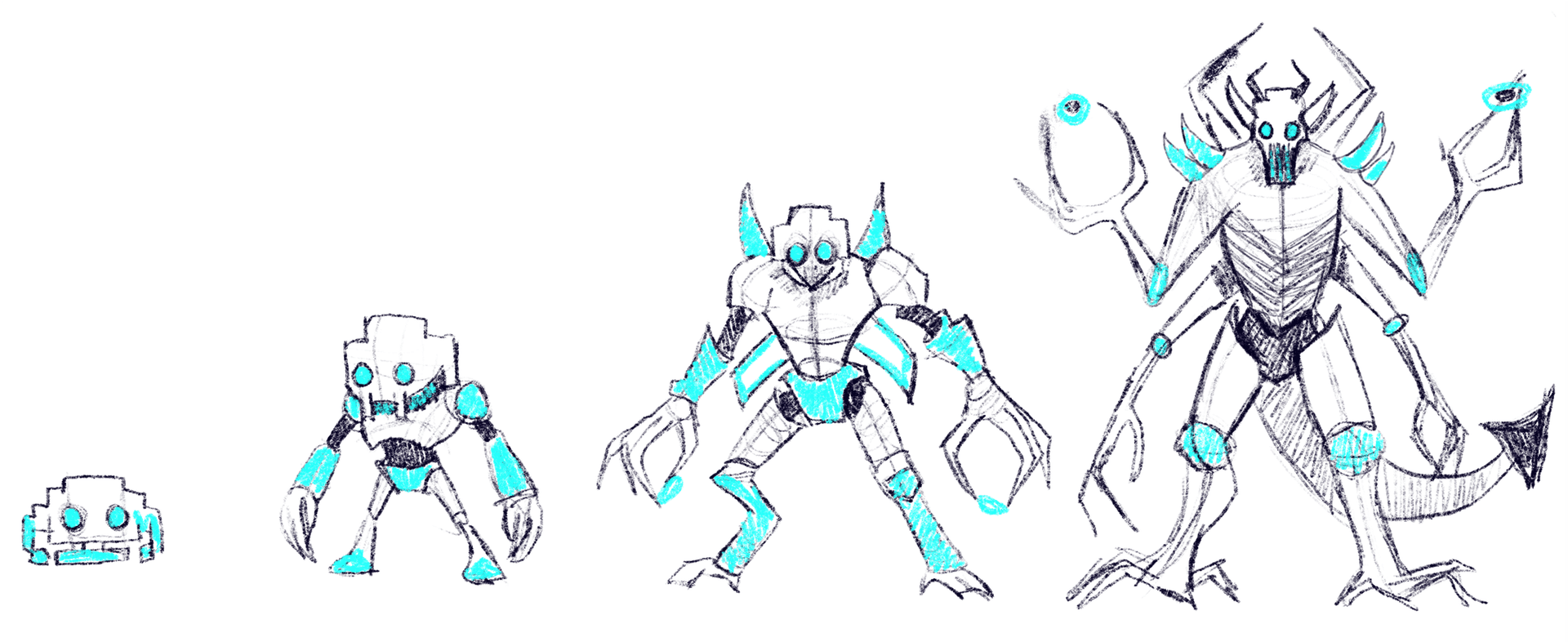
Design story: evolution
Gregomon evolution experiments
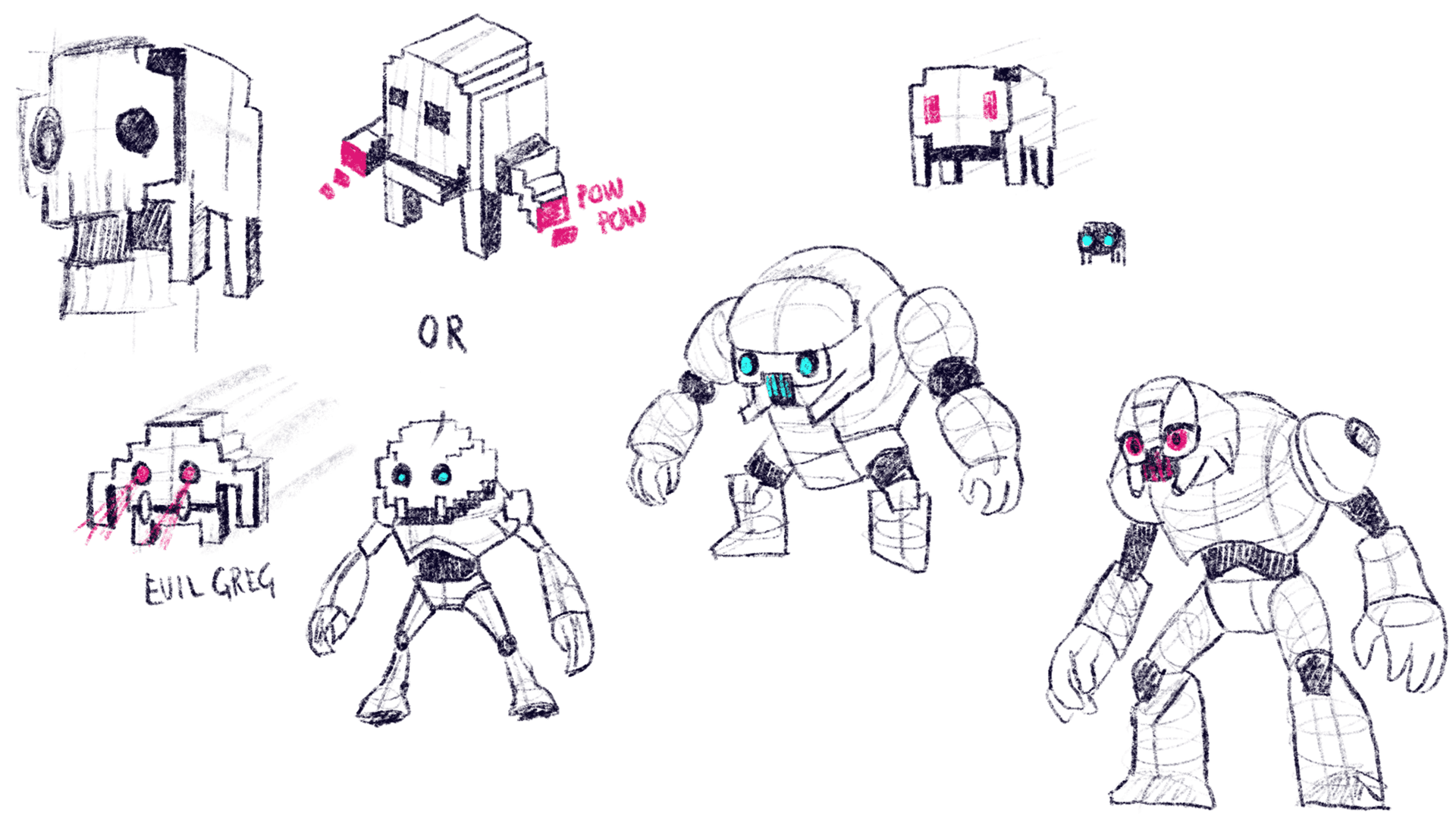
This feedback sparked the creation of "Gregomon" — named by our developer Vic. I explored how this character could evolve into bigger, scarier forms corresponding to higher plan tiers. Taking inspiration from classic 8-bit games, I experimented with different evolutionary stages.
However, my sketches drifted into "Dragon Ball Z" territory, which was visually impressive but didn't match our brand's overall tone. The feedback was clear: keep iterating toward something more aligned with our identity.
Design story: breakthrough
Big Daddy-inspired direction
The breakthrough came when I remembered the iconic "Big Daddy" character from BioShock. Its bulky suit and ominous presence inspired a new approach that felt perfectly aligned with our menacing, sci-fi angle.
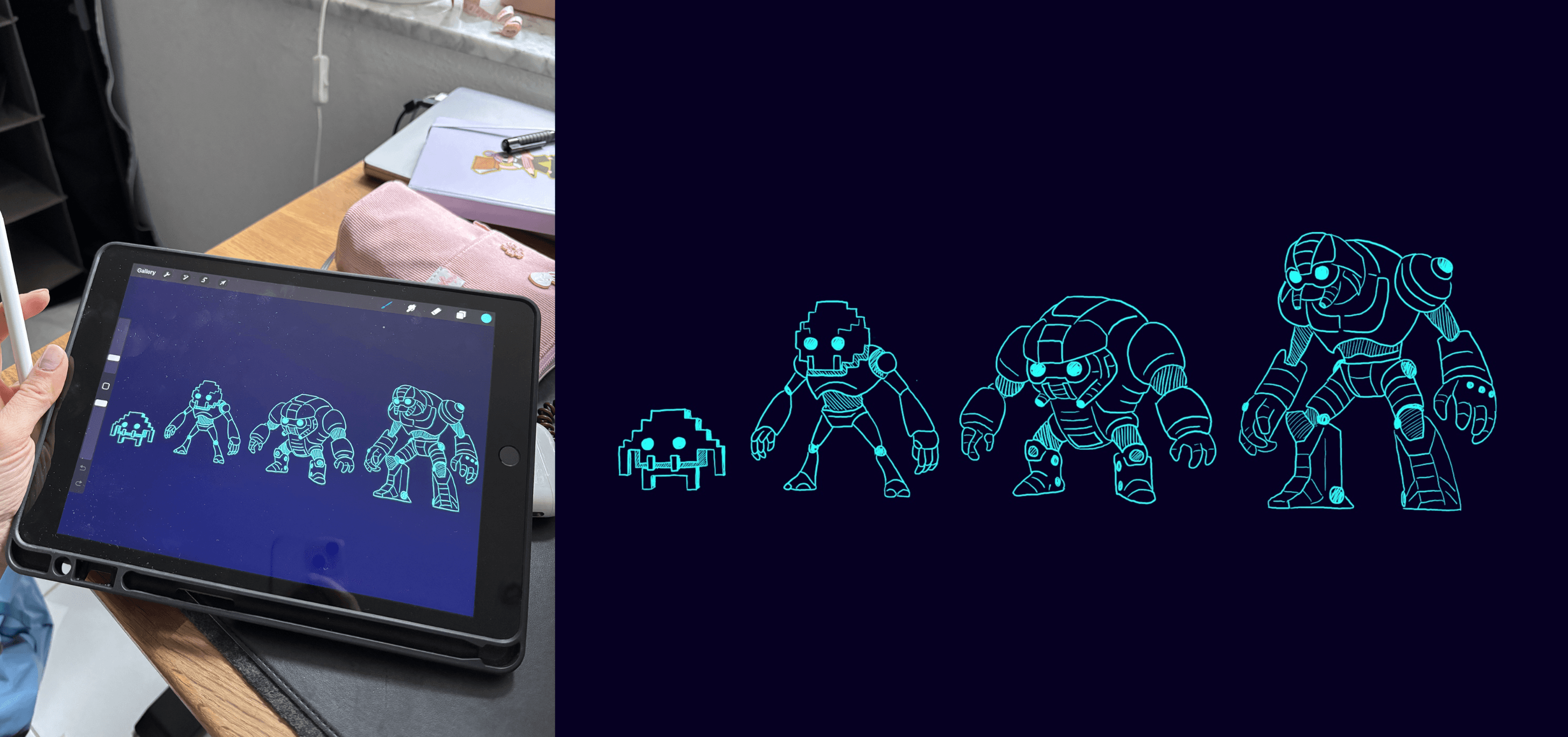
Still maintaining Gregomon as the core shape, I developed multiple sketches capturing three different evolution levels — lower, mid, and high-level threats — each with an intimidating, tech-forward style that matched our brand personality.
Design story: final execution
Digital execution and neon integration
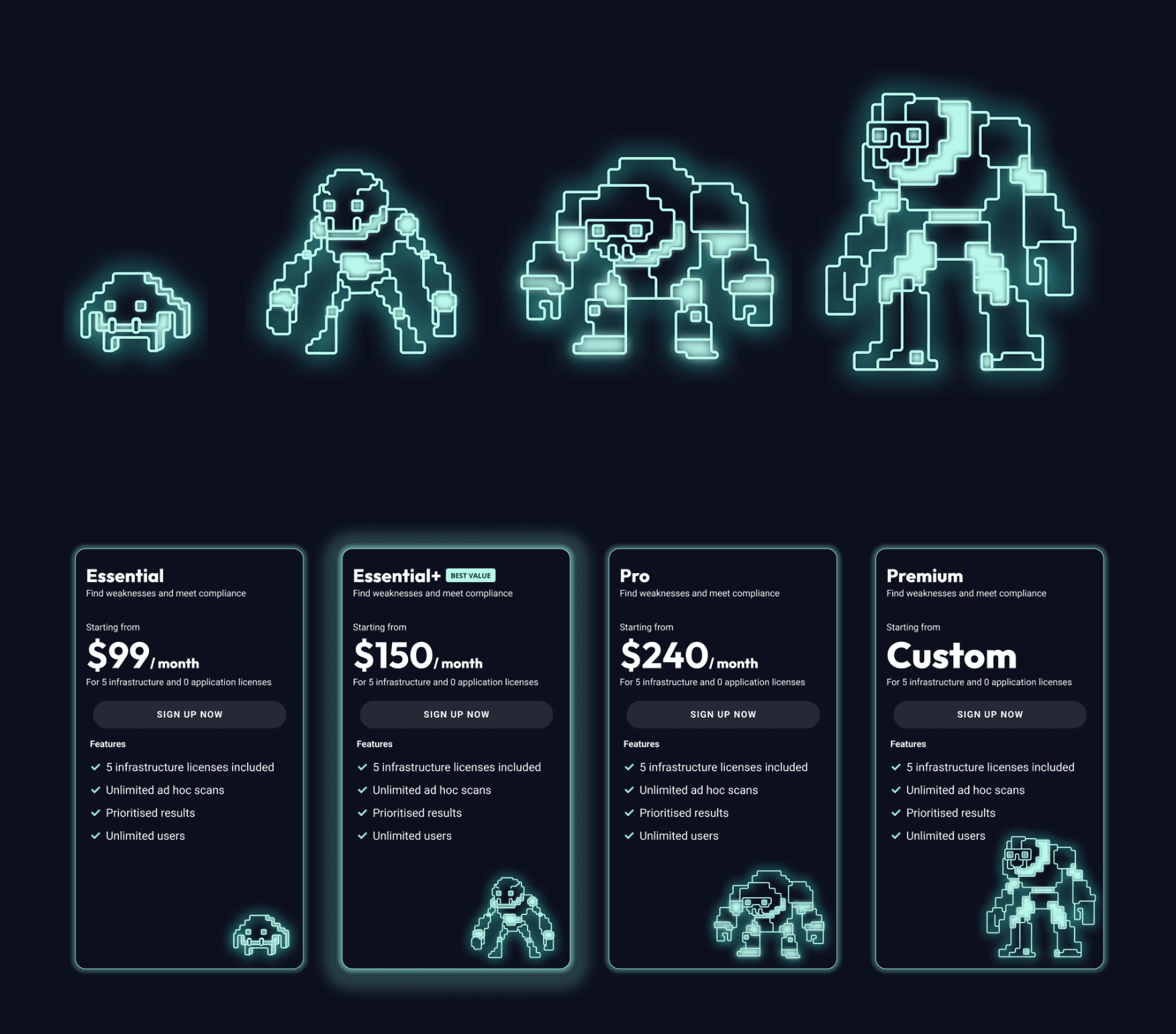
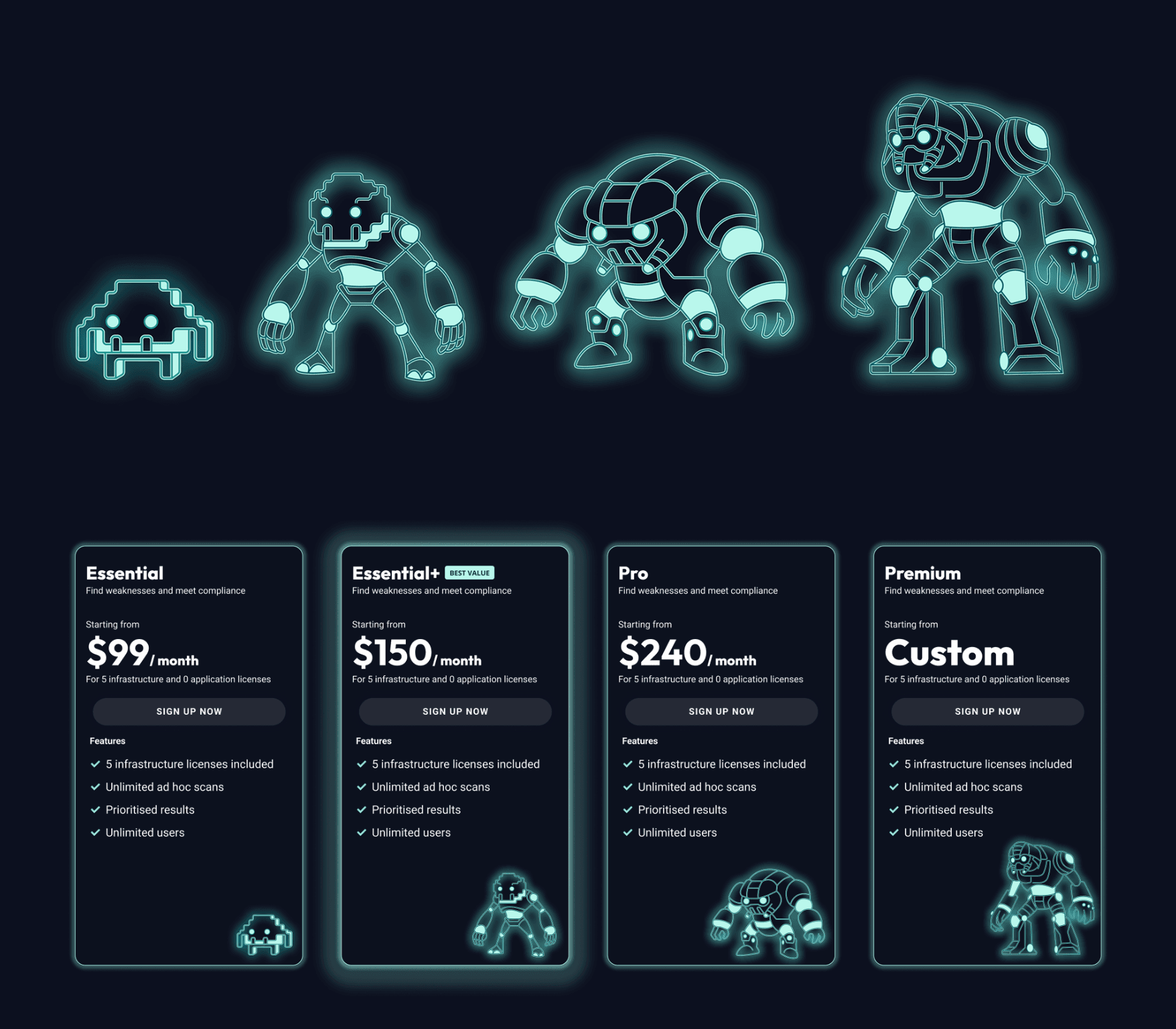
The final digital execution placed these characters against dark backgrounds using light blues, creating the neon contrast that reinforced our brand's new visual direction. Initially, I experimented with pixel-style rendering, but team feedback from our Product Design Lead Dewi was crucial: "forget the constraints and embrace the detailed, rounded lines approach."
By vectorising these villains instead of constraining them to pixel art, we created intricate characters that truly popped off the page and felt genuinely "Intruder" — playful yet professional, memorable yet functional.
What made this character development special wasn't just the final outcome, but how we got there. Every sketch round and feedback session embodied our core value that "the best idea wins." The iterative process — from superheroes to cybersecurity villains to game-inspired evolution to Big Daddy-inspired threats — showed how embracing feedback and creative exploration leads to stronger design solutions.
Implementation
From research to reality
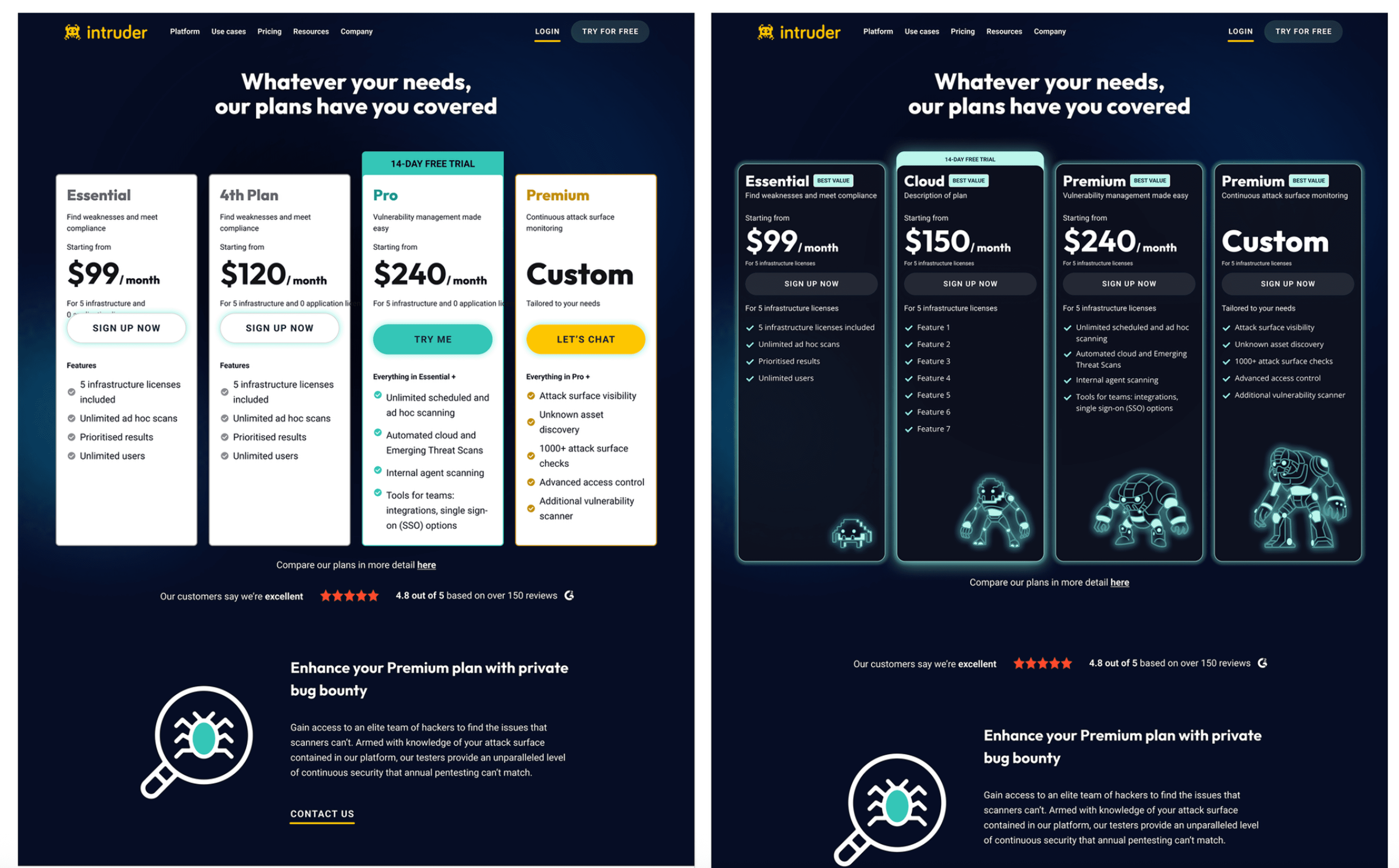
The new Cloud tier directly addressed the Tenable dependency — full scanning capabilities using proprietary technology, no third-party integration required. I redesigned the pricing page to differentiate tiers by customer control preferences and use cases rather than just feature lists, with the character system woven throughout to help users identify where they fit.
Before & after
Impact
Measuring success through business outcomes
Within three months of launch, the results exceeded projections:
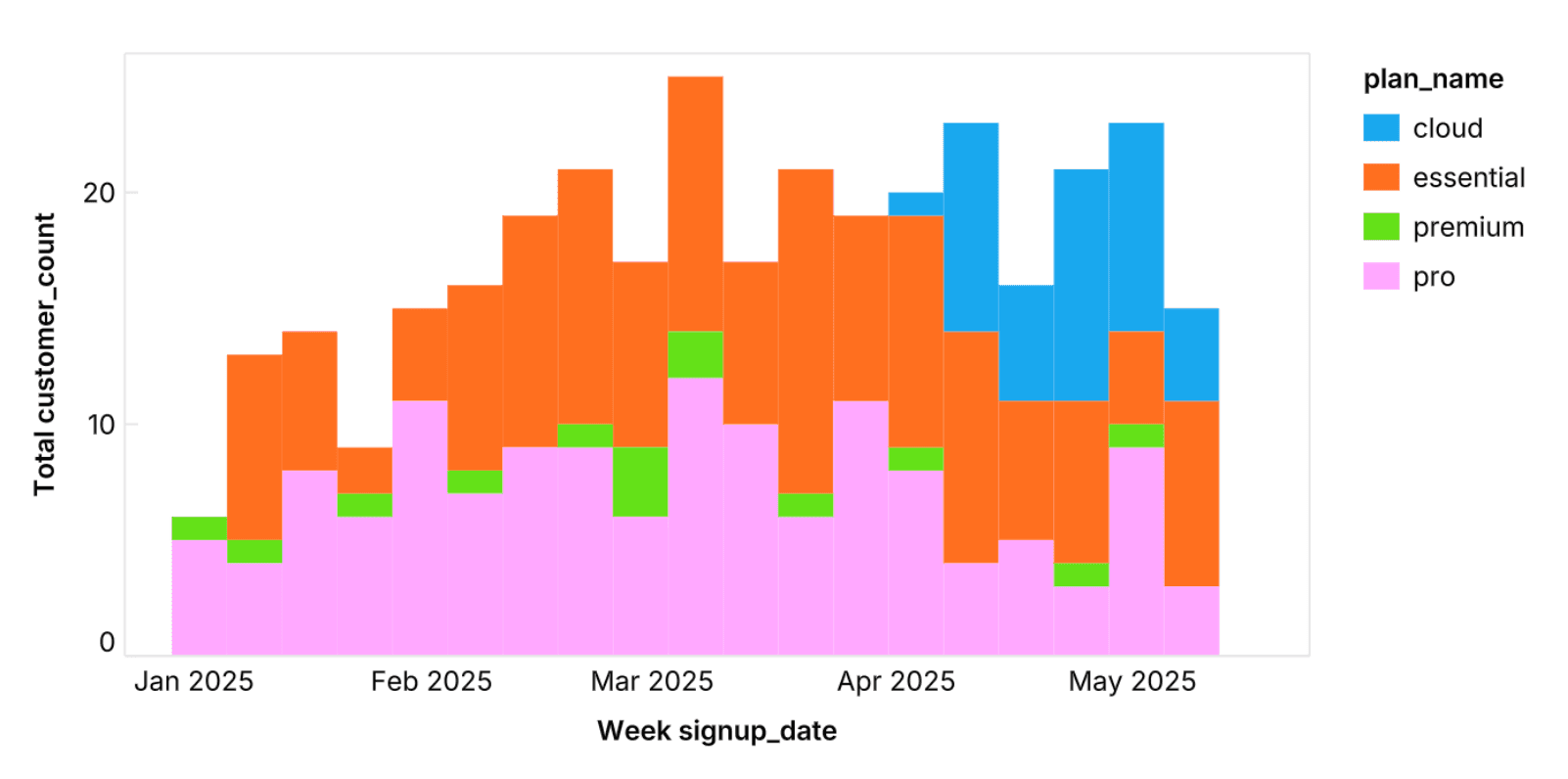
- Cloud conversion rate of 4.26% — outperforming Pro (3.94%) and Essential (3.52%)
- Cloud retention at 88.9% vs Pro at 65.3% — customers aligned with the right solution stayed longer
- Broke 430k ARR faster than projected, with more Cloud customers than Enterprise
- Hit 6.1% Cloud adoption in six months, surpassing the 5% target
The results validated the core hypothesis: removing technical dependencies and letting customers choose based on their actual needs drives better conversion, retention, and growth.
Reflection
The power of research-driven design
This project proved that deep customer research enables confident changes to revenue models. By understanding customer motivations and constraints, we designed solutions serving real needs — and the character-driven approach made complex pricing decisions feel intuitive rather than overwhelming.
The success of removing Tenable dependency opened new possibilities for product development and market expansion. Sometimes the best path forward is eliminating constraints rather than working around them.
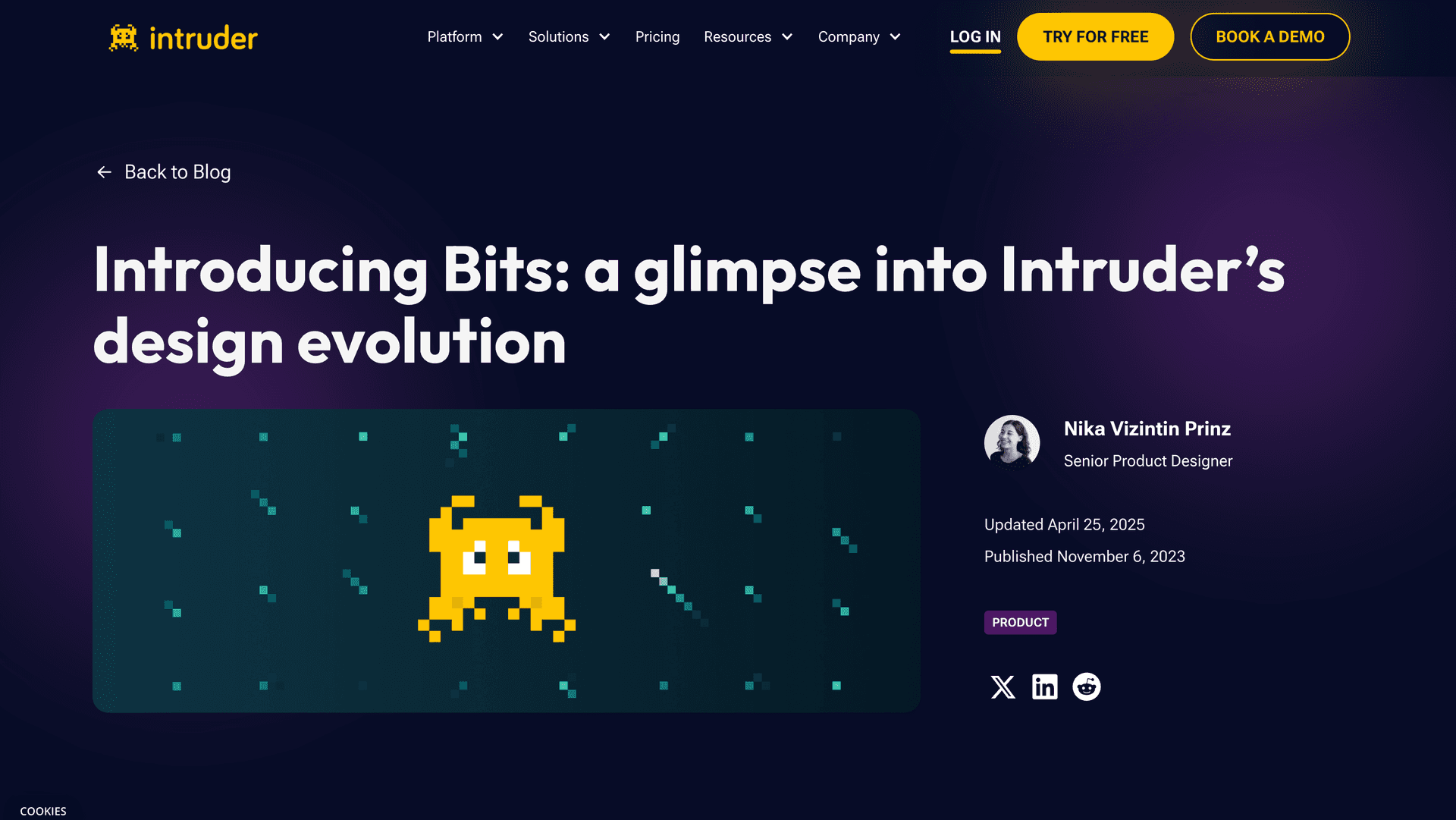
I documented the full character design journey in a blog post for Intruder — every iteration, pivot, and lesson learned.